
A Seattle elopement photographer's guide to Washington marriage law, courthouse weddings, and why an intimate elopement might be the better move
A guide to Washington marriage law, courthouse weddings, and why an intimate elopement might be the better move.
If you've started Googling "how to elope in Washington" or "Seattle courthouse wedding," you've probably landed on a confusing mix of legal jargon, wedding photographer blogs, and county websites that don't actually answer the question you're asking: do I really have to get married at the courthouse?
YOU DON'T! And once you understand how Washington marriage law actually works, you may find that skipping the courthouse gives you more control, more time, and more of a wedding day that feels like yours.
Because realistically... The Seattle Municipal Court wedding experience is a LOT of waiting around in a crowd of people and not very intimate at all.
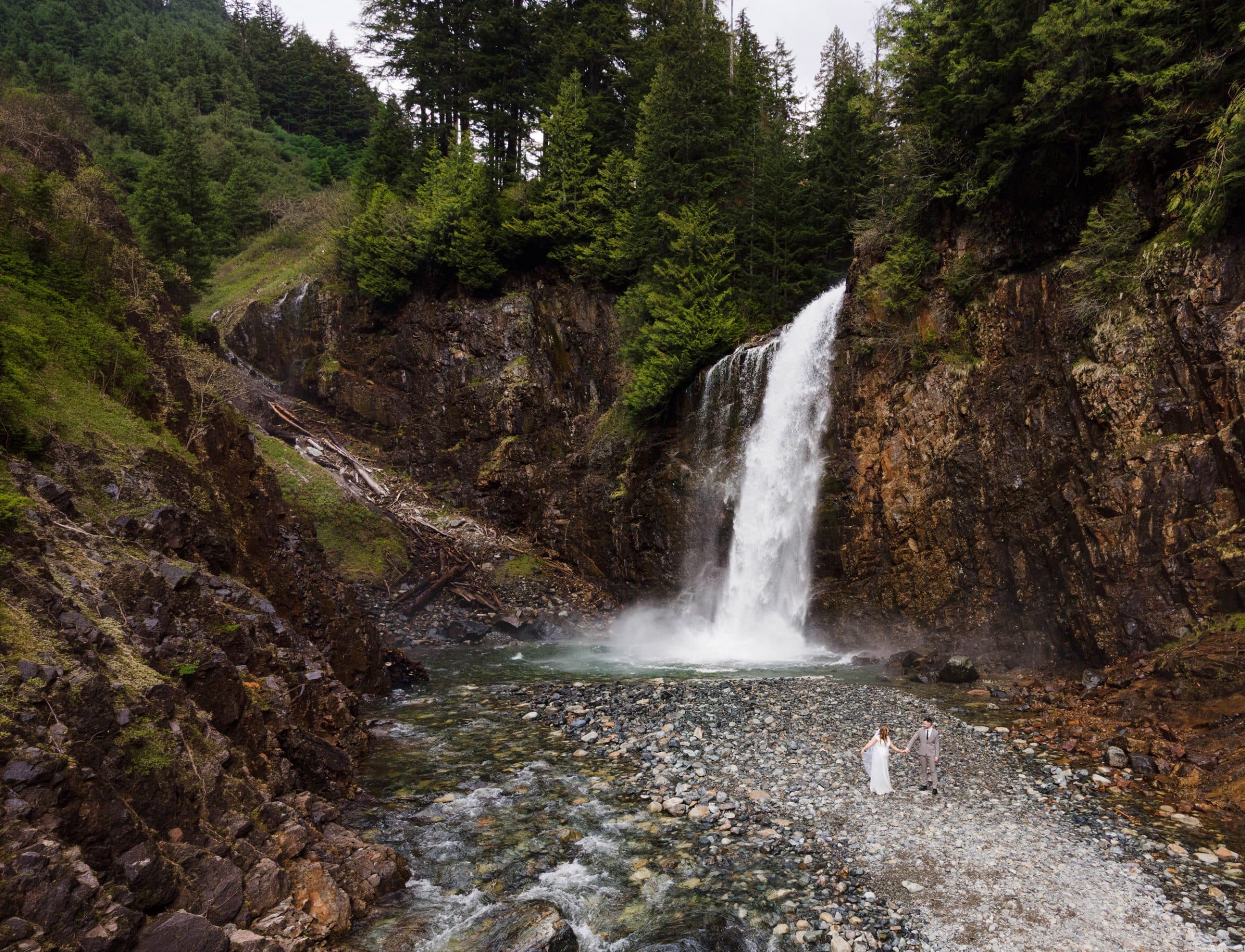
I've officiated and photographed for more than 10 couples who were otherwise considering getting married at Seattle Municipal Court. I wanted to write this guide to help couples figure out whether or not a Seattle courthouse wedding is right for them vs. eloping intimately.
Here's the quick version before we get into the details:
Why couples are choosing an intimate elopement over the courthouse:
- You control your own timeline. No sharing a judge's calendar with six to twelve other couples on the same day. Your ceremony happens when you want it to, where you want it to, for as long as you want it to.
- You can bring more than 8 people. Most courthouses cap guest counts for ceremonies. Hold your own ceremony and invite your parents, your whole bridal party, or just the two of you, your choice.
- It often costs less and goes further. A judge runs $150–$300 for a few minutes of their time. A family member, friend, or even your photographer can do it for FREE, leaving more of your budget for the parts of the day you'll actually remember.

Why couples get stuck at the courthouse anyway:
- Your wedding is on the judge's clock, not yours. Courthouse ceremonies are famously brief, often clocking in around 15–20 minutes start to finish, and you're slotted in alongside 6+ couples getting married that day. It can take 2 full hours sometimes.
- You're at the mercy of that day's backlog. If the courthouse is running behind, your "quick and easy" ceremony can turn into an hour of waiting in a crowded government lobby in your wedding clothes.
- It eats into your photography and your evening. Every minute spent waiting in line is a minute not spent with your photographer - and each other, for that matter - somewhere beautiful, and it raises the odds you're rushing to dinner reservations afterward.
Let's break down exactly how Washington marriage law works, why it makes all of this possible, and how to do it right.

Wait, Anyone Can Get Ordained in Washington?
For real. Yes. Washington state law (RCW 26.04.050) authorizes "any regularly licensed or ordained minister" to legally solemnize a marriage, alongside judges, court commissioners, and tribal court judges. There's no state registry, no licensing exam, and no fee required to become an officiant. Organizations like American Marriage Ministries (AMM) and the Universal Life Church (ULC) ordain people online, for free, often in minutes.
That means your best friend, your sibling, an aunt, or your wedding photographer can legally marry you in Washington. There's no special training required, and Washington doesn't register officiants with any government office. You'll just want to keep a copy of your ordination certificate on hand in case anyone ever asks for proof.

What you actually need for a legal marriage in Washington:
- A marriage license from any county auditor in the state (it doesn't have to be the county where you're getting married, a license from any Washington county works anywhere in the state)
- An ordained officiant to solemnize the ceremony (this can be a friend, family member, or your photographer, as long as they're ordained)
- Two witnesses, who can be anyone, as long as they're present and watching when you consent to marry each other and sign the license. Washington doesn't specify a minimum witness age in statute, but most counties treat 18+ as the standard for someone competent to witness a legal document
One important nuance: Washington does not allow self-solemnization. Some states (Colorado and Washington, D.C., for example) let couples marry each other with no officiant at all. Washington isn't one of them, you do need a third-party officiant present. The good news is that "third party" can absolutely be your photographer, and that's exactly the loophole that makes all of this work.

Why You Might Want to Skip the Courthouse Altogether
A lot of couples assume the courthouse is the "default" path to a legal marriage and that an intimate elopement is somehow the workaround. It's actually the opposite, the courthouse is just one option, and for a lot of couples, it's not the easiest one.
Your day belongs to a shared schedule. Seattle Municipal Court and other Washington courthouses can marry anywhere from 6 to 12+ couples in a single day, and ceremonies are kept short by necessity, often wrapping up in well under 10 minutes so the judge can move to the next couple. You'll get a specific appointment window, and there's limited flexibility if you need to reschedule, change the time, or add anything personal to the ceremony itself.
You're exposed to that day's backlog. Courthouses don't reliably notify you if they're running behind. If there are only a couple of judges on duty and a full slate of couples ahead of you, your "quick" appointment can turn into 2 hours in your wedding outfit, watching the clock.
It costs money for very little ceremony. Judges typically charge in the $150–$300 range for officiating, and you're getting a few minutes of their time with little ability to personalize the experience.
Guest limits. Many Washington courthouses cap ceremony attendance, commonly somewhere around 8 guests, due to space constraints in the courtroom. If you wanted your parents, your siblings, and your two closest friends there, you may not be able to fit everyone in.
You lose flexibility on date, time, and location. The courthouse is the courthouse. You have only a couple of locations on site to choose from, you can't reschedule around weather, and you can't pick a sunrise slot if that's what you want.

When you elope with your own officiant instead, none of these constraints apply. You pick the date. You pick the time. You pick the location, a forest, a ferry, a rooftop, your favorite trail, Volunteer Park Conservatory, wherever feels like you. You can have two guests or twenty. And because you're not waiting in a courthouse lobby, you maximize the time you actually get with your photographer, which means more photos, more moments, and less stress about making it to dinner on time.
"But Is It Actually Safe to Skip the Courthouse If One of Us Is Marrying In From Another Country?"
This is one of the most common questions couples ask, and the answer is reassuring: for immigration purposes, it doesn't matter who officiated your wedding, as long as the marriage was legally valid where it took place.
U.S. immigration law uses what's called the "place of celebration" rule. USCIS looks at whether your marriage was valid under the law of the state (or country) where you got married, not at the specific job title of the person who married you. A marriage performed by an ordained minister carries exactly the same legal weight, in the eyes of USCIS, as one performed by a judge or county clerk, because Washington law treats them identically. There's no special immigration benefit to having a judge officiate instead of a friend, family member, or your photographer.
What actually matters for immigration purposes is that:
- The marriage is legally valid under Washington law (license obtained, ordained officiant, two witnesses, license properly filed)
- The marriage is bona fide, meaning it's a genuine relationship and not entered into solely to obtain immigration benefits
If you're navigating a marriage-based visa or green card process, especially anything with a tight timeline like a K-1 fiancé visa, it's worth a quick consult with an immigration attorney to make sure your specific situation (timelines, documentation, prior marriages, etc.) is squared away. But the choice between a courthouse wedding and an intimate elopement with your own officiant is NOT something that affects your immigration case either way.
Here is a small collection of galleries from couples who initially contacted me about a courthouse wedding, but decided to elope with me as their officiant and photographer instead.
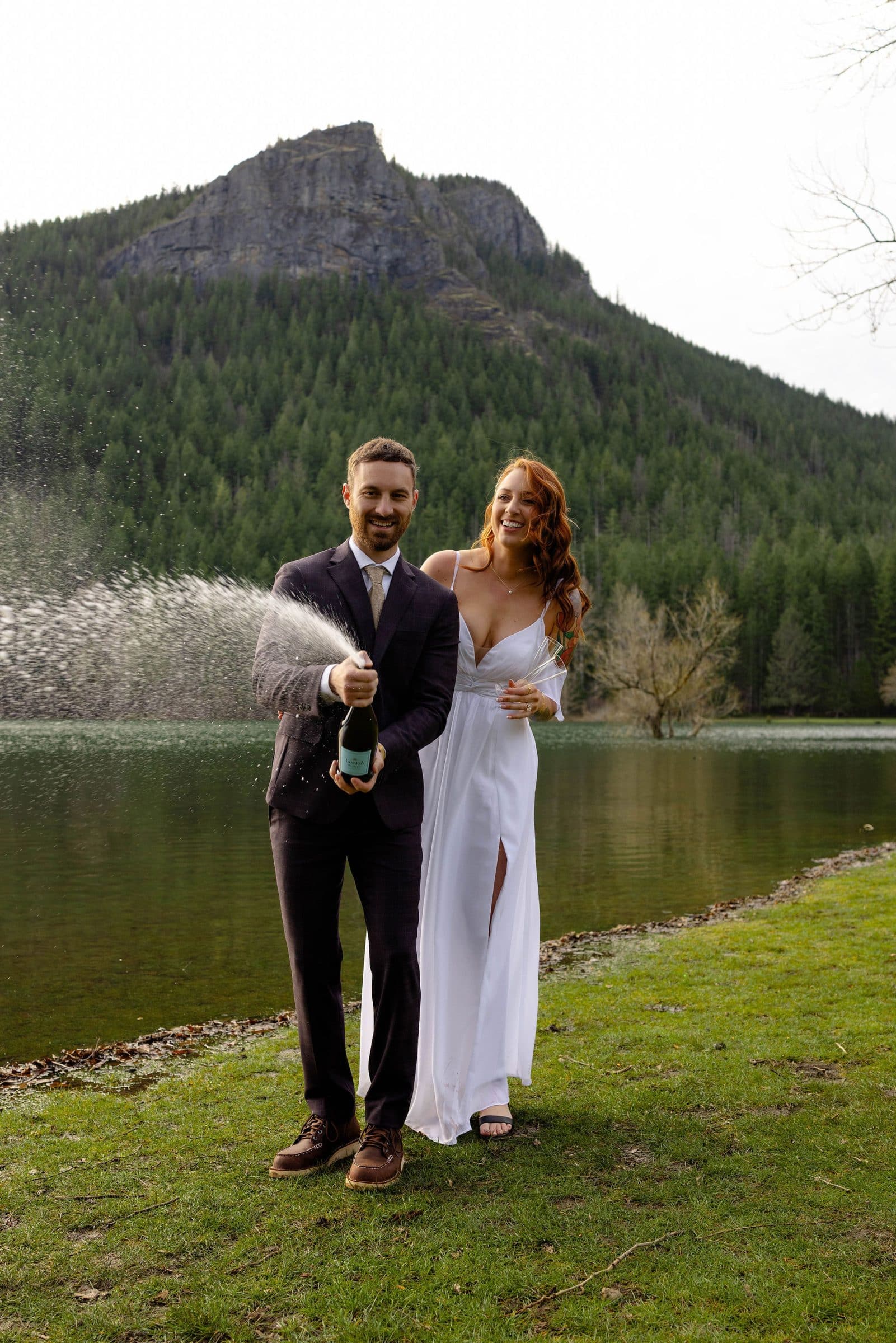
Megan + Zach
Megan and Zach were originally going to have a courthouse wedding, but then learned they could get married completely intimately at Rattlesnake Lake. I helped plan and officiated their wedding, and two strangers who happened to be also having a photo shoot nearby signed as their witnesses

EJ + PETE
EJ and Pete were going to keep things simple with a courthouse wedding, but realized having their dog Theo with them was important. We took the gondola up Crystal Mountain and I officiated, photographed and video'd their intimate ceremony with a small group of their close family members

LILY + ISAAC
Lily and Isaac opted to have an intimate wedding with a small group of family members at Volunteer Park Conservatory instead. I officiated and photographed their event, and our total time together was about two and a half hours.
Tom + Cevon
Tom and Cevon wanted an intimate wedding with absolutely zero guests: Just them and a photographer. I officiated, and two family members they met up with later for dinner signed as their witnesses.
How an Elopement Ceremony Actually Works
Washington law is refreshingly unspecific about what your ceremony has to look like. Per RCW 26.04.070, there's no required format, except for two things:
- You and your partner have to express consent to marry each other (your "I do," or whatever version of that feels right to you) in front of your officiant and your two witnesses
- Your officiant has to pronounce you legally married before the ceremony ends
- You need two witnesses to sign your license. This can be anyone.

Above: A couple Megan and Tyler met on the hiking trail after their elopement ceremony signs their marriage license as witnesses.
That's it. Everything else, vows, readings, rings, music, the order of events, is entirely up to you. Your ceremony can be 90 seconds or 45 minutes. It can be deeply personal and emotional, or short, sweet, and a little silly. There's no judge's script to follow and no courtroom decorum to observe.
Your Photographer Can Be Your Officiant, Too!
Here's the part that surprises most people: there's nothing stopping your photographer from being ordained and serving as your legal officiant and your photographer on the same day.
I'm personally ordained with the Universal Life Church and have successfully married every couple I've ever officiated for! Woohoo!

In practice, this looks like:
- I guide you through the process, the documentation, and assist you in finding a location (optional)
- On your wedding day, I guide you through your vows, ask you to confirm your consent to marry each other, and pronounce you married, all while my camera is rolling
- The ring exchange, the kiss, the signing of the license, and your reactions are all captured in real time, because there's no separate "ceremony person" standing between you and your photos
This means no awkward moment of your officiant walking out of the photo as you kiss, no extra vendor to coordinate, and no need to choreograph your day around someone else's schedule. Your ceremony script can be as simple as a few sentences or as detailed as a full set of personalized vows, whatever fits the two of you.
How to Actually Make It Official: Filing Your Marriage License
Once your ceremony is done, there's one more step to make everything legally binding: getting your signed license back to the county.
- Get your marriage license before the ceremony. Apply through any Washington county auditor's office (it doesn't have to be the county you're marrying in). There's a mandatory 3-day waiting period after you apply, and once that waiting period ends, the license is valid for 60 days.
- Sign it immediately after the ceremony. You, your partner, your officiant, and your two witnesses all need to sign the license right after you're pronounced married. Your witnesses can be anyone, and technically don't need to be present at the ceremony.
- Return it to the county within 30 days. This is the officiant's legal responsibility (that's me, if I'm your officiant), and it can be done one of two ways: dropping it off in person at the county's recording office, or mailing it back using the self-addressed envelope included in your license packet. Missing this deadline can actually create legal complications for the officiant, so reputable officiants treat it as non-negotiable.
- Keep your "pretty" certificate. The keepsake certificate you receive on your wedding day is for display, it's not the same as the official recorded license, but it's still yours to keep.

How to Check That Your Marriage Was Actually Recorded
Here's something a lot of couples don't realize: even courthouse weddings don't come with a notification that your marriage was officially recorded. Whether you marry at the courthouse or eloped privately, the responsibility falls on you (or your officiant) to confirm everything went through.
The good news is that Washington counties make this easy to check yourself:
- King County has an online records search tool where you can look up recorded documents. If your record shows up with a "Marriage Certificate" document type, it's been processed, and you can request a certified copy.
- It can take up to five months for a marriage record to be sent from the county to the Washington State Department of Health, so don't panic if it's not showing up immediately. Checking with the county auditor directly (rather than the state) will usually get you a faster answer in the meantime.
- If you ever need a certified copy for something like a name change, passport, or immigration paperwork, you can request one through your county auditor's office for a small fee.
I confirm this step for every couple I officiate for, but it's good to know how to check it yourself, too.
So... Courthouse or Elopement?
If you're picturing a wedding day that's actually yours, your timeline, your location, your people, your pace, an intimate elopement gives you all of that without sacrificing anything legally. You're not doing anything less official than a courthouse wedding. You're just doing it without the waiting room.
If you've got a courthouse date on the calendar already (or you're still deciding), I'd love to talk through what an elopement could look like instead. Whether that's a sunrise ceremony in the mountains, something simple downtown, or anywhere in between, I can be your photographer and your legally ordained officiant, so the only thing you have to plan is showing up.
Ready to talk it through? Reach out at [email protected] and let's build a day that's actually about the two of you!
This guide is intended for general informational purposes and reflects Washington State marriage law as of 2026. It is not legal advice. Couples with immigration cases, prior marriages, or unique legal circumstances should consult an attorney for guidance specific to their situation.

